
The AMD Opteron X2150 APU represents a singular curiosity in the history of computing. More than a mere processor, it was a bold attempt by AMD to merge the realms of server processors and dedicated graphics cards, at a time when the demand for computing power and graphical performance was continuously growing. Launched in the context of the rise of artificial intelligence, virtualization, and high-resolution rendering, the X2150 aimed to offer a one-stop solution for demanding data center and workstation environments. Its positioning, while innovative, proved complex, placing it between traditional processors and dedicated discrete graphics cards, with performance that was sometimes difficult to evaluate and justify in comparison to more specialized solutions. However, analyzing this chip helps better understand market evolutions and AMD’s ambition to push the boundaries of processor design.
What are the technical specifications that define the AMD Opteron X2150?
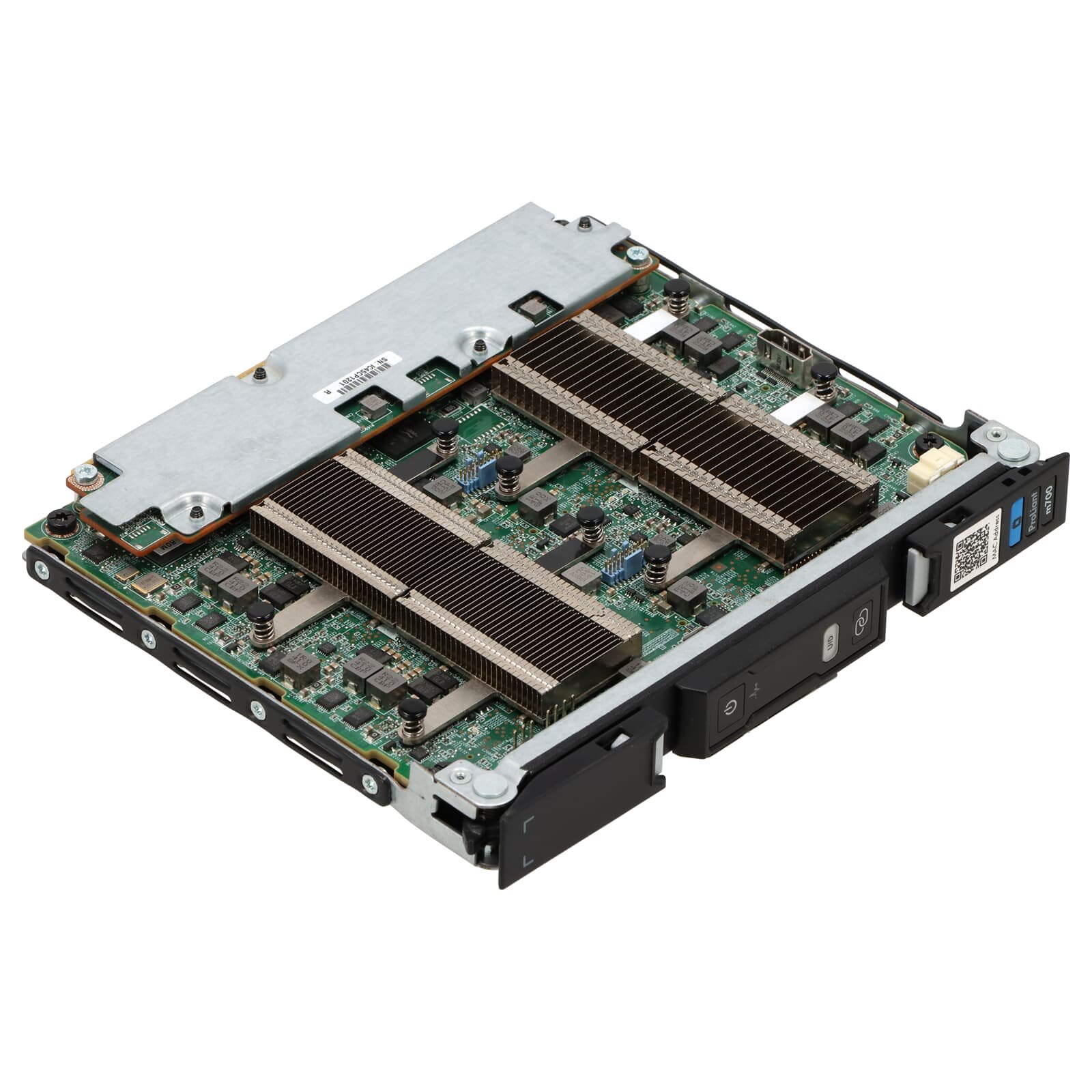
The AMD Opteron X2150 APU stands out by its hybrid architecture, combining a central processing unit (CPU) based on AMD’s « Naples » architecture and a graphics processing unit (GPU) called « Vega 20 ». It is a complex silicon architecture, manufactured with a 12nm process by TSMC. The CPU part is an octa-core with 16 threads, capable of reaching a base frequency of 2.4 GHz and a boost frequency of 3.2 GHz. This configuration allows efficient handling of multi-threaded workloads. The GPU part, on the other hand, has 512 compute units, corresponding to significant performance for the time. The VRAM memory is shared with the system memory, giving it considerable flexibility in resource management. More specifically, the Opteron X2150 supports up to 256 GB of DDR4 ECC memory, offering crucial stability and reliability for professional environments. The memory bandwidth reaches 64 GB/s, allowing fast data transfer between the CPU, GPU, and memory. The TDP (Thermal Design Power) of the entire APU is 280W, highlighting the power it deploys and the need for a high-performance cooling system. It is also important to note that the Opteron X2150 does not integrate CUDA cores, a feature specific to NVIDIA architectures.
How does the AMD Opteron X2150 perform in terms of real-world performance?
Assessing the performance of the Opteron X2150 is complex, as it is a hybrid product. In traditional CPU benchmarks, it offers performance similar to other server processors of its generation, slightly above an EPYC 7252 in single-threaded performance but often being outperformed by more recent alternatives in multi-threaded tasks. The graphical performance, while impressive for a server processor, is less powerful than that of high-end dedicated graphics cards. In terms of FPS (frames per second) in games, the Opteron X2150 allows playing modern games with medium to high graphics settings in Full HD (1920×1080), but it will struggle to achieve higher resolutions or ultra settings. Compared to a NVIDIA GeForce RTX 2060, for example, the Opteron X2150 offers about 60% of the gaming performance. In professional workloads such as 3D rendering, simulation, or machine learning, the CPU/GPU combination can be an asset, allowing certain tasks to be accelerated by using both processors together. However, for applications that fully benefit from specific GPU architectures (such as CUDA), a dedicated NVIDIA graphics card is generally preferred.
Which technologies are supported by the AMD Opteron X2150 APU?
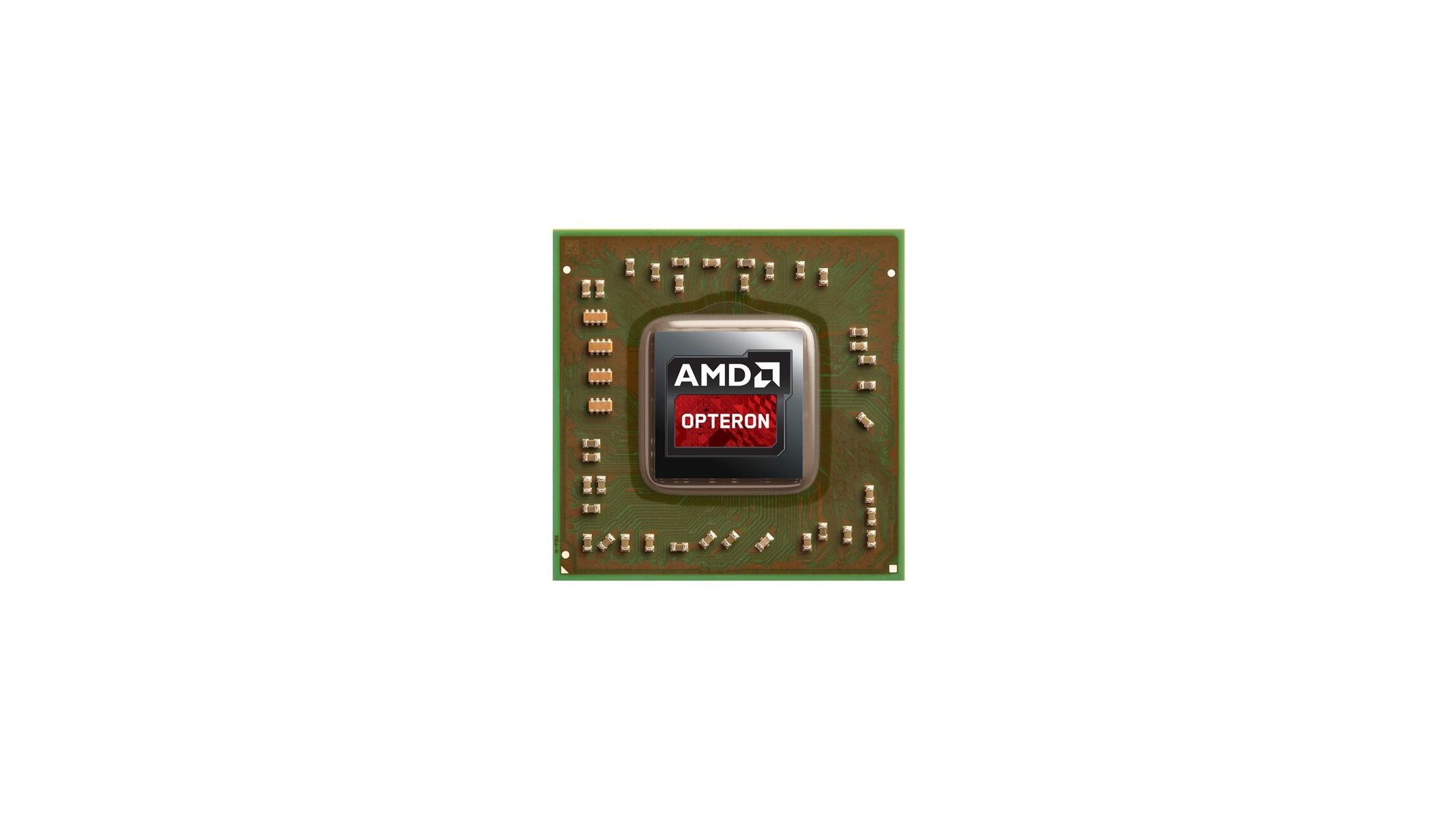
The AMD Opteron X2150 APU supports a wide range of technologies aimed at improving performance and compatibility. At the graphical level, it supports DirectX 12, allowing the use of the latest features of Microsoft’s graphical API. It is also compatible with OpenGL, an open standard for 2D and 3D rendering, and Vulkan, a modern and low-latency API. The APU also supports hardware acceleration of certain video codecs, facilitating the decoding and encoding of high-definition videos. While it does not integrate CUDA cores, the AMD Opteron X2150 offers its own set of APIs and libraries, such as ROCm (Radeon Open Compute), for parallel computing and machine learning acceleration. ROCm allows developers to optimize their applications to use the computing power of the Vega 20 GPU. Additionally, the built-in ECC (Error-Correcting Code) memory ensures optimal data integrity, crucial for critical applications and server environments. Finally, support for virtualization (AMD-V) allows for the creation and management of virtual machines on the APU, optimizing resource utilization and improving server density.
What was the context of the launch of the AMD Opteron X2150 and what was its market positioning?
The AMD Opteron X2150 APU was launched in 2018, marking AMD’s attempt to establish itself in the server processor segment with an integrated solution. Its positioning was unusual: it aimed to combine the advantages of server processors (computing power, reliability) with those of dedicated graphics cards (graphical performance). The launch price of the Opteron X2150 was around $4,000, placing it in a price range comparable to servers equipped with EPYC processors and separate graphics cards. However, the complexity of the APU and the lack of mature software ecosystem hindered its adoption. Additionally, the competition from NVIDIA graphics cards, widely used in professional applications and machine learning, made it difficult for the Opteron X2150 to stand out. Its arrival came in the context of strong demand for artificial intelligence and machine learning solutions, fueling the growth of NVIDIA graphics cards, which offered a better-developed software ecosystem. Consequently, the AMD Opteron X2150 did not meet the expected commercial success, but it remains an interesting curiosity in AMD’s history and testifies to its innovation ambitions.
Within the same range, one finds the 3260 HE.
Why is the AMD Opteron X2150 less used today?
The main reason for the limited use of the AMD Opteron X2150 today lies in its unique positioning, which did not perfectly meet market needs. While the idea of combining CPU and GPU on a single chip is appealing, the APU was compromised between two worlds: it was not as powerful as dedicated graphics cards for intensive graphical applications, nor as optimized as traditional server processors for heavy computational workloads. Additionally, the software ecosystem around AMD APU, and particularly ROCm, did not benefit from the same level of development and optimization as NVIDIA’s CUDA, which limited adoption by developers and professionals. The complexity of the chip also made its management more difficult and required specific skills for optimization. The competition from alternative solutions, such as servers equipped with EPYC processors and NVIDIA graphics cards, proved more attractive for most users. Finally, the high cost of the APU relative to the performance offered also contributed to its limited distribution.
In conclusion, the AMD Opteron X2150 APU represents an innovative but ultimately unsuccessful attempt by AMD to merge the worlds of server processors and dedicated graphics cards. Despite its impressive technical specifications and unique combination of CPU and GPU, the lack of software optimization and competition from specialized solutions limited its adoption. However, its existence testifies to AMD’s ambition to push the boundaries of processor design and explore new approaches to meet the growing needs for computing power and graphical performance.
